The Six Gates of Calm Strength
A Daily Practice for Calm Strength and Peace Under Pressure
The Still Warrior Six is a brief practice designed to strengthen the body while teaching the nervous system a deeper lesson:
I can be under pressure without losing my peace.
These movements combine a comfortable horse stance, controlled isometric effort, relaxed breathing, and deliberate calm. The goal is not to strain, grimace, or prove how tough you are. Your body will already know it is working. Your job is to show it that effort does not have to become panic.
The entire practice takes only a few minutes and can be done almost anywhere.
Before You Begin
Step gently into a horse stance.
Place your feet wider than shoulder width, lower your hips slightly, and keep your knees tracking in the same direction as your toes. Let your back remain tall and relaxed.
Do not force yourself into a deep stance.
Depth is earned, not forced.
Throughout the practice, continue breathing naturally. Keep your face, neck, and shoulders relaxed. You may even allow a small smile to rest on your lips.
That smile is not decoration. It is a message:
I am working, but I am safe.
Use approximately 60 to 70 percent of your maximum effort. If your hardest possible effort is a ten, remain around a six or seven.
Hold each effort for approximately seven to ten seconds.
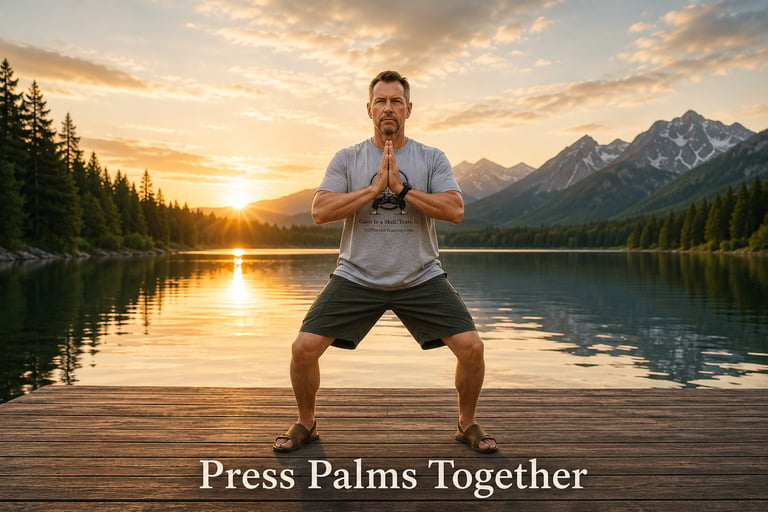
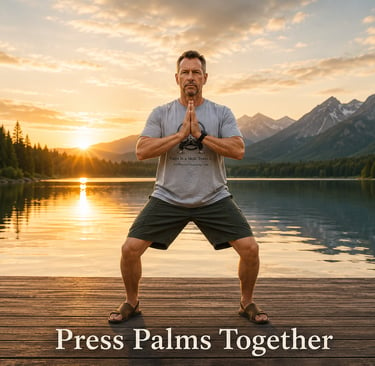
1. Press the Palms Together
Bring your palms together in front of your chest.
Begin pressing one palm into the other, gradually building the pressure. Keep breathing easily as your chest, shoulders, arms, and hands begin to work.
Do not press as hard as you possibly can. Stay near a six or seven out of ten.
Keep your jaw loose, your shoulders down, and your face calm.
Breathe.
Smile gently.
Let your nervous system experience strength without alarm.
2. Pull the Hands Apart
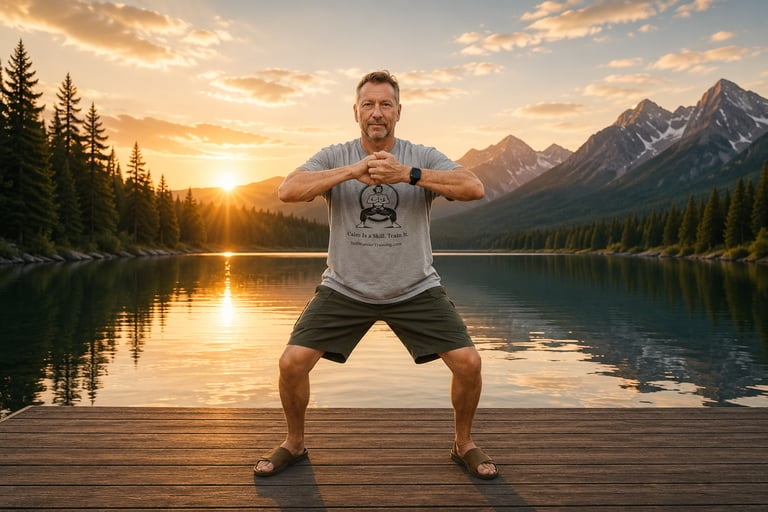
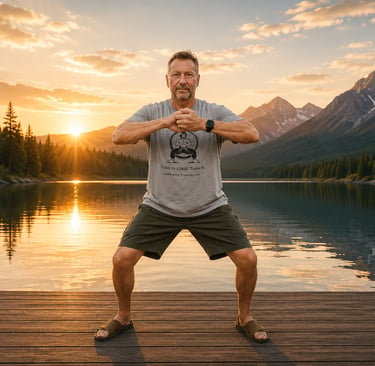
Remain in your horse stance and interlock your fingers in front of your chest.
Without letting your fingers separate, begin pulling your hands away from each other.
Gradually increase the effort until you reach approximately 7 out of 10.
Do not allow your neck to tighten. Do not clench your jaw, hold your breath, or squeeze your eyes.
Let the muscles work while the rest of you remains calm.
Breathe steadily.
Keep the small smile.
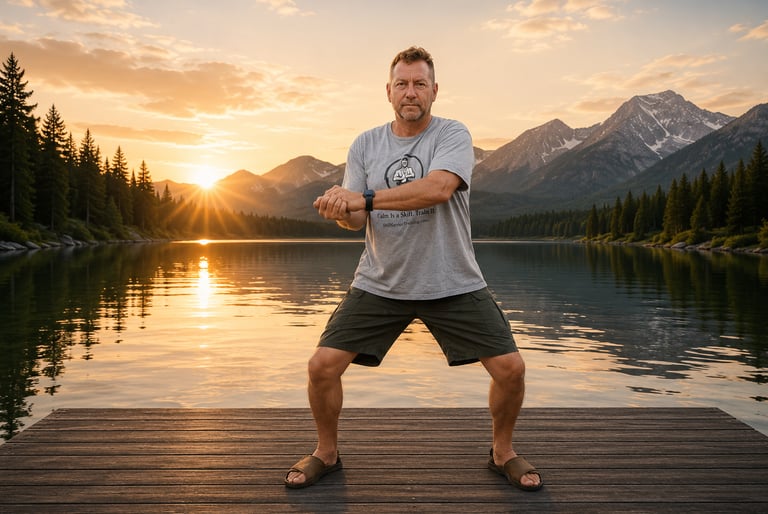
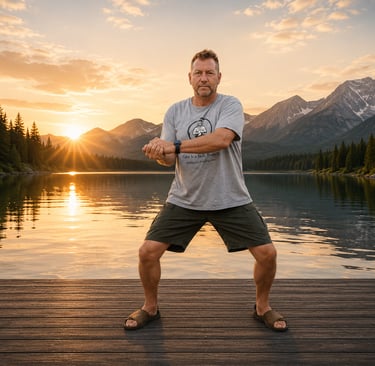
3. Press Left Up and Right Down
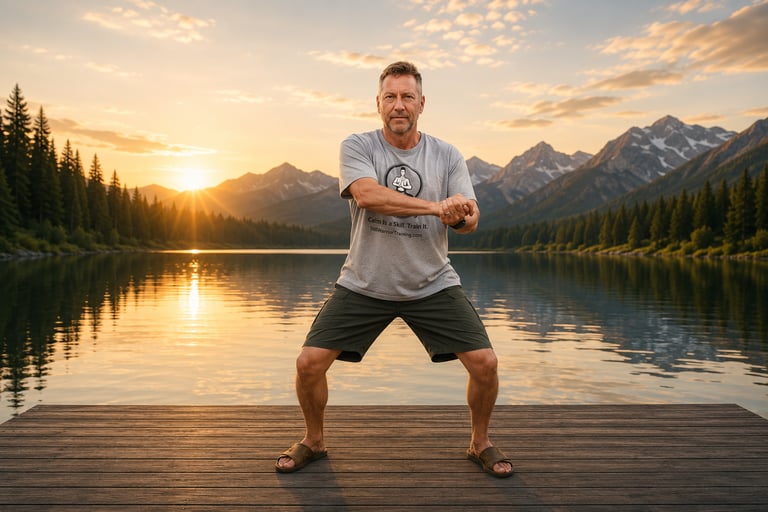
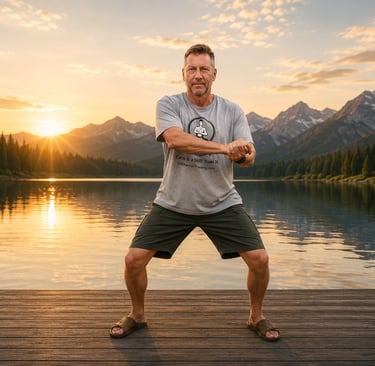
Extend your left forearm in front of your body with the left palm facing upward.
Reach your right hand across and place the right palm down against the left palm.
Press upward with the left hand while pressing downward with the right.
The hands do not move, but both sides are working.
Build the pressure gradually to approximately a 6 or 7 out of 10.
Keep your shoulders relaxed and your breathing smooth.
Do not let the effort spread into unnecessary tension.
Stay calm.
4. Press Right Up and Left Down
Reverse the position.
Extend your right forearm in front of your body with the right palm facing upward.
Reach your left hand across your body and place the left palm down against the right.
Press upward with the right hand while pressing downward with the left.
Again, the hands remain still while the muscles create opposing pressure.
Breathe normally.
Relax your face.
Allow the body to work while the mind remains quiet.
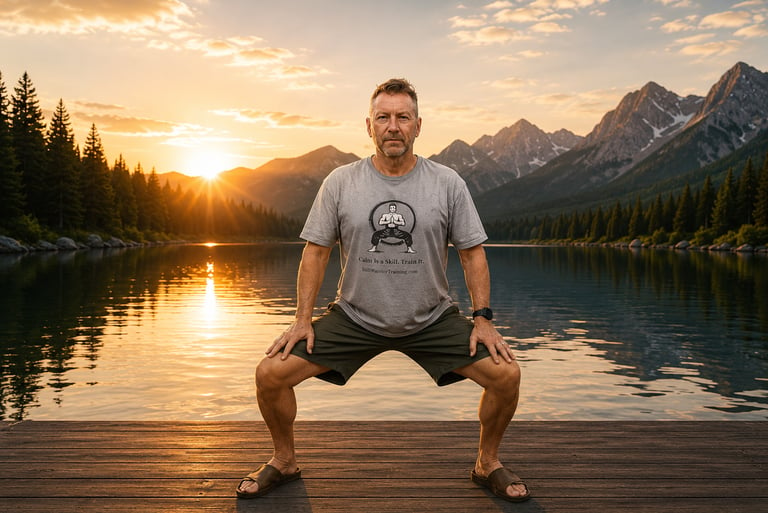
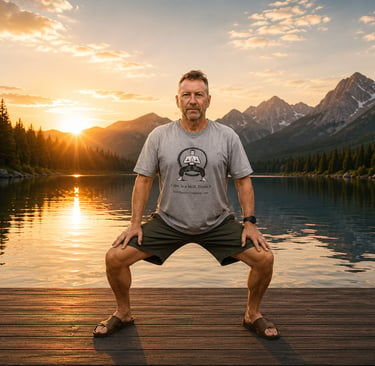
5. Press Down Into the Thighs
Remain in your horse stance and, if it feels comfortable, lower your hips slightly deeper.
Place your right palm on your right thigh and your left palm on your left thigh.
Press firmly downward into both thighs.
At the same time, allow the legs to resist the pressure so the body remains steady.
Feel the arms, shoulders, core, hips, and legs working together.
Do not hold your breath.
Do not turn the movement into a contest.
Press, breathe, relax, and smile.
Let your nervous system hear the message:
My body is under pressure, but I am okay.
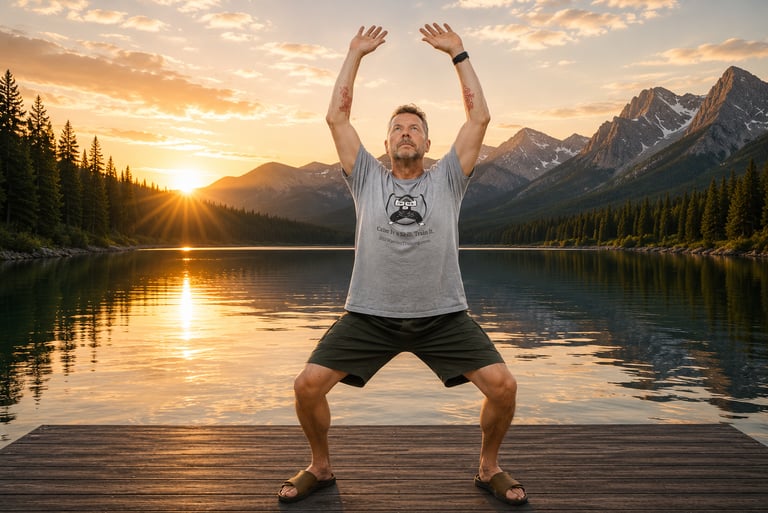
6. Reach Toward the Sky
Remain in your horse stance and slowly reach both hands overhead, palms facing upward.
Reach as high as is comfortable and gently look toward your hands.
This final position is less of an isometric effort and more of a stretch and posture-building movement.
Lengthen through the spine.
Open the chest.
Keep breathing.
Do not force the shoulders or lower back. Simply reach, expand, and allow the body to become tall.
Stay for several calm breaths.
Return to Stillness
Slowly lower your arms and gently rise out of the horse stance.
Do not rush.
Stand quietly for a few moments and check in with your body.
Is anything painful?
Is anything still unnecessarily tight?
Allow those areas to soften.
Stand as though you are a tree—rooted through the feet, tall through the spine, relaxed through the branches.
Remain aware of your breathing.
In.
Out.
Raise your hands slowly in front of you with the palms facing upward. Pause for a moment, then gently turn the palms and press them down.
Notice the simple miracle of movement.
You ask your hands to rise, and they rise.
You ask them to lower, and they lower.
Move slowly and appreciate what your body is still capable of doing.
How Often Should You Practice?
The Still Warrior Six takes only two or three minutes.
Practice it at least once each day.
Morning is good.
Afternoon is good.
Before bed is good.
Twice a day is even better. Three times is better still, provided the practice remains comfortable and peaceful.
This is not about pushing harder and harder.
It is not about seeing how much discomfort you can tolerate.
It is about teaching the body a new response to effort:
I am under pressure, but I am breathing.
I am working, but I am relaxed.
I am challenged, but I am at peace.
That is calm strength.
That is the Still Warrior way.
Still Warrior Training Bruce@stillwarriortraining.com
Return to stillness. Carry it into the world.
© 2026 Bruce R. Black. All rights reserved.
Still Warrior Training is for personal growth and educational purposes only. It is not medical, psychological, or martial arts instruction.